AI can answer every question faster than we can.
Studying Artificial Intelligence and Philosophy at King's College London, I saw firsthand how AI can retrieve and synthesise information faster than any human. That is an incredible tool — but it also means the skill of asking the right questions, thinking laterally, and applying knowledge in messy real-world contexts matters more than ever.
Gridless builds lateral skills — the ability to think innovatively and approach problems outside of the box. This is the thinking that positions AI as a tool rather than a replacement.
These are the people who will lead in our fast-changing future.
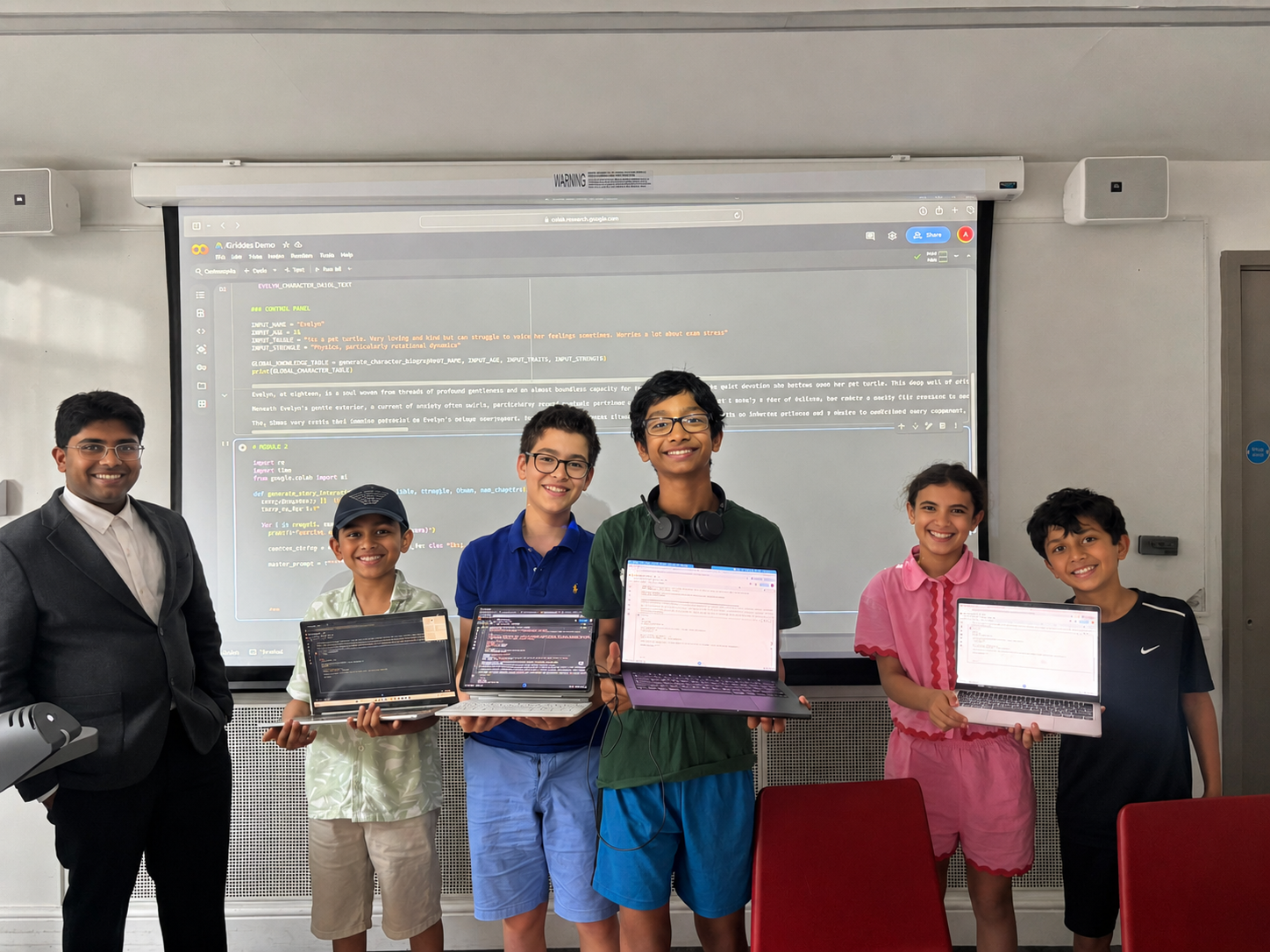
Passion needs a place to land.
Growing up, I used to love literature; I was always writing poems, essays, stories. But as exam pressure mounted — 11+, GCSEs, IB, A-Levels — I found myself thinking more and more about how to fit the markscheme, tick the box, and impress the examiner. My writing started to sound like every other student's, and my creativity, passion, and uniqueness slowly faded into the background.
Gridless is built to sit alongside academic rigour — and give it somewhere to land.
This wasn't just my experience. My friend, now studying Astrophysics at university, used to design rockets in his margins during physics class. School gave him the technical knowledge, but little space to pursue that interest in a practical, real-world way.
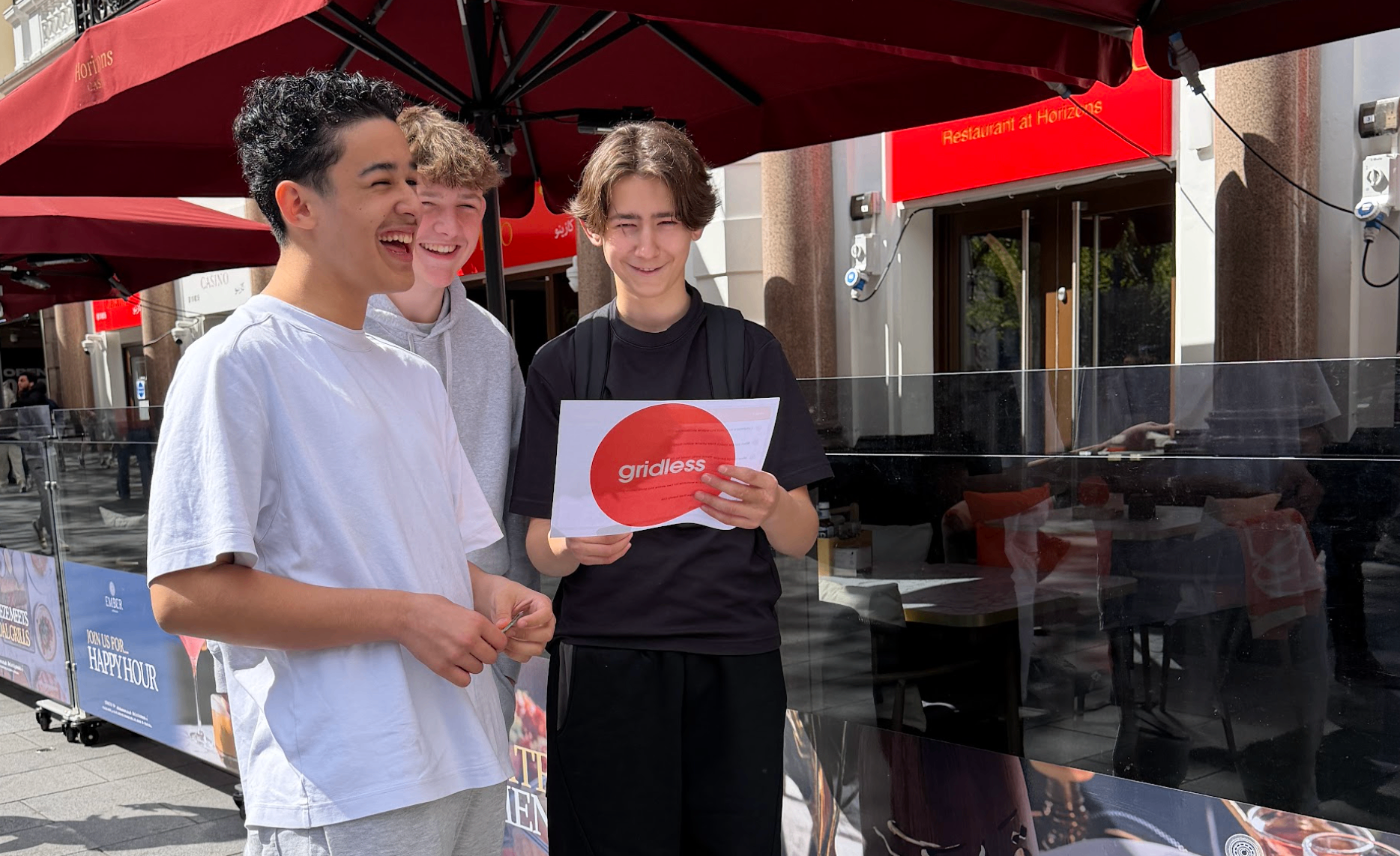
I built Gridless to bridge that gap — to connect knowledge and practical application. When students see the point and the potential of what they learn, academics become a passion, not just a requirement.
The decision I was never asked to question.
Like many students, I followed a linear path: working towards exams, aiming for the next credential, and deferring bigger questions about direction and purpose. School teaches discipline and knowledge brilliantly; what it rarely has time for is helping students figure out why they are learning what they are learning.
Since I was 15, I believed being a lawyer was my only true calling — I even received an offer to study law at university. But because I had deferred the bigger questions, I felt lost when I realised I had based my decision off of a couple of projects, school clubs, and To Kill a Mockingbird. I pivoted my degree entirely, and now I find complete joy in founding Gridless.
Countless other students change their degrees, drop out, or stick out a degree they dislike. That is not a product of bad students — it is a product of students committing to a specialism they knew very little about in practice.
I want Gridless to be the place where students explore their interests practically and make better-informed decisions about their future.